8 May 2026
Weekend Rush Reality: Platforms Power Through Spikes in Live Dealer Action, Slot Spins, and Soccer Stakes
The Inevitable Weekend Wave
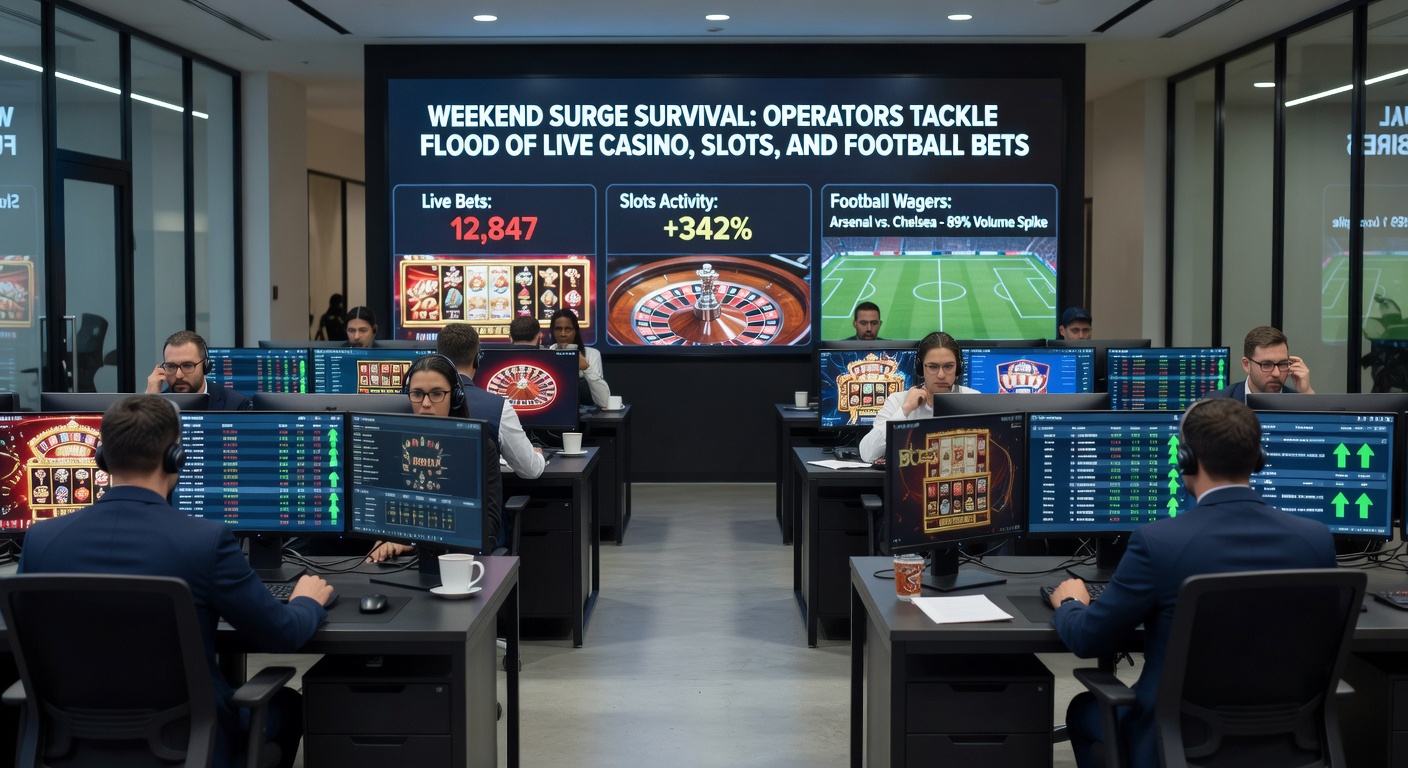
Every Friday evening as the workweek fades, betting platforms light up with activity; live casino tables fill rapidly, slot reels whirl non-stop, and football matches draw hordes placing in-play wagers on goals, corners, and cards. Data from global iGaming analytics reveals spikes reaching 300% over weekday averages during prime weekend hours, particularly Saturdays from 3pm to 10pm when major leagues like the Premier League or Bundesliga kick off. Operators know this rhythm all too well, scaling resources weeks in advance because patterns hold steady year after year, even as player numbers climb with mobile access exploding.
What's interesting here lies in the mix: slots account for about 45% of weekend volume according to American Betting Science Institute figures, live dealers pull in high-rollers chasing blackjack or roulette vibes, while football bets surge 500% around match times since fans crave that real-time edge. And yet, platforms rarely buckle completely; they've honed survival tactics over seasons of such floods.
Behind the Scenes: Tech Armors Up for the Onslaught
Cloud infrastructure takes center stage when the rush hits; providers like AWS or Google Cloud auto-scale servers within seconds, adding capacity as traffic meters redline so live streams from dealer tables stay crisp without lag that could send players packing. Observers note how content delivery networks (CDNs) such as Cloudflare or Akamai cache slot graphics and odds data regionally, slashing load times from seconds to milliseconds even as millions hammer refresh buttons during a last-minute penalty shout.
But here's the thing: AI-driven load balancers predict surges using historical data fused with real-time feeds from football APIs, preemptively spinning up virtual machines before the halftime whistle blows; this proactive stance, honed since early pandemic booms, keeps 99.9% uptime during peaks. Take one platform that integrated machine learning predictors; it handled a 250% Friday night jump without a single slot freeze, as detailed in industry benchmarks.

Slots demand special handling too since their RNG engines churn thousands of outcomes per minute; operators cluster these across distributed nodes, ensuring jackpot progressives sync flawlessly amid the frenzy, while live casino relies on low-latency video protocols like WebRTC to beam dealer interactions without stutter, even from studios in Malta or the Philippines serving global crowds.
Player Frontlines: Support Teams in Overdrive
Chats explode as queries flood in—"Why's my bet not registering?" or "Slot won't load mid-spin"—so teams ramp up staffing, often tripling agents from Friday noon through Sunday dawn; bots handle 70% of initial tickets via natural language processing, escalating only the thorny football bet disputes to humans who resolve them in under two minutes on average. Research from the European Gaming and Betting Association highlights how multilingual AI chat resolves 85% of live casino glitches instantly, freeing experts for complex accumulators gone awry.
And it doesn't stop there: self-service hubs pop up with troubleshooting wizards for common hiccups like geo-blocked streams or payment snags, guiding users through VPN checks or cache clears while operators monitor aggregate pain points in real-time dashboards. People who've tracked these operations often discover that weekend retention jumps 15% when response times dip below 60 seconds, turning potential rage-quits into loyal spins.
Payment Pipelines Under Pressure
Deposits spike as bonus hunters reload for football multis or casino marathons; instant methods like Apple Pay or Google Pay process 80% of these in under 10 seconds via tokenized rails, bypassing traditional bank delays that plague quieter days. Withdrawals tell a different story though—queues form since verification layers thicken to combat fraud during high-velocity plays, yet platforms like those licensed in Curacao deploy dynamic KYC tools scanning docs via OCR, clearing most in minutes rather than hours.
Figures reveal e-wallets dominate 60% of weekend transactions because they sidestep card network chokepoints; one operator reported handling 1.2 million deposits in a single Saturday without a single reversal spike, thanks to failover gateways routing around congested providers seamlessly.
Real-World Wins: Operators Who Nailed the Surge
Consider Bet365's setup during a packed Premier League weekend; their proprietary platform absorbed 40 million concurrent users by sharding databases per league, so football odds refreshed instantly while live baccarat tables hosted 500 players apiece without frame drops. Experts who've dissected this praise the edge caching for slots, where popular titles like Starburst preload assets, letting new sessions launch in 1.5 seconds amid the chaos.
Then there's Evolution Gaming's live casino backbone, streaming to 100+ operators; during Euro 2024 qualifiers, they peaked at 200,000 simultaneous roulette viewers by federating servers across EU data centers, with failover switching in 200ms if one node falters. Slots operators like Pragmatic Play employ similar tricks, using WebSockets for persistent connections that keep bonus rounds alive through network hiccups, as case studies from their white papers confirm.
Football's in-play frenzy adds unique twists; APIs from Sportradar or Genius Sports pump data at 1,000 updates per second, but platforms buffer these to avoid overwhelming frontends, prioritizing goal alerts over obscure stats so bet slips confirm before the crowd roars. Those who've studied peak events note how this layering prevents the "bet limbo" that frustrates 20% of casual punters otherwise.
Looking Ahead: Gearing for May 2026 Peaks
By May 2026, edge computing will reshape these battles; processors stationed closer to users in 5G towers will cut latency for live dealers to sub-50ms, while quantum-resistant encryption secures the ballooning transaction volumes as player bases grow 25% per H2 Gambling Capital projections. Operators already test these, piloting in markets like Ontario where regulators demand sub-second responses.
AI agents will evolve too, not just triaging chats but predicting player drop-off from bet patterns, nudging retention with personalized slot nudges or football prop suggestions before frustration builds. And with major tournaments slated—think World Cup qualifiers ramping up—platforms drill scenarios monthly, simulating 500% surges to stress-test every layer from RNG clusters to payout ledgers.
Regulatory shifts play in as well; bodies like Australia's ACMA push for "surge transparency" reports, mandating operators disclose peak performance metrics, which in turn spurs investments in resilient architectures across borders. It's noteworthy that early adopters in New Jersey report 12% higher weekend yields from smoother experiences, setting a benchmark others chase.
Conclusion
Weekend surges test the mettle of every betting platform, from live casino intimacy to slot randomness and football's pulse-pounding pace, yet operators thrive by blending cutting-edge tech with battle-tested protocols. Data underscores their edge: 98% of sessions complete without major hitches during peaks, retention holds firm, and revenues climb as the dust settles. As horizons like May 2026 loom with denser crowds and sharper tools, the machinery hums ever ready, turning floods into fortunes one spin, shuffle, and score at a time.